Monday, March 14, 2011

Alternative Radiation Protection

With the threat of the nuclear reactor meltdown, many people are now fearing fall out on the northwestern coastline of America. The typical recommendation is to take iodine tablets or dip your finger in liquid iodine or betadine (NEVER ingest it). Those living a more natural lifestyle may wonder what they can do naturally to increase their iodine intake without iodine tablets or liquid iodine.
There are several great articles floating around on the internet that have been composed recently and in the past on what you can do naturally. Here is a list of my favorites:

Sean over at Greenman Ramblings

Laura Bruno

Dixie Pauline

Ingrid Naiman

Todd Caldecott

Susun Weed

Margi Flint

MeditationExpert.com
At the moment, I have little to fear about radiation from this event due to my geographical location. However, there are nuclear plants all around me and we live on a major fault line that could go at any time. This leads to the potential for a nuclear disaster. Because I take a natural approach and feel I can safely and effectively combat radiation with natural products, here is a list of what I am stocking my pantry with:

Kelp from Ryan Drum - I have a pound stored away that I like to add to food

Miso - due to concerns about soy, I'll most likely stick with alternate forms of miso. you can find a wealth of recipes for using miso here.

14 Mushroom blend (thanks to Sean and Margi for this source, mine is in the mail)

Herbs: Calendula, Clover, Burdock, Nettles, Oatstraw (see Sean's article for reasons behind this) - consumed in infusion form

Epsom salts and baking soda - there are so many uses for these 2 items, we always have extra on hand

Niacin supplements - blocks receptor sites that hold onto radiation 
If the first 3 items are consumed on a daily basis, there will be little to fear about radiation from fall out, xrays, plane rides and more.

Darcey posted a delicious sounding recipe on her blog. I'll be adding this to my recipe book! As a side benefit to eating these foods daily, we'll be more healthy, have stronger immune systems and be able to combat all types of cancer. Seems like as good as reason as any to increase them in our daily diet.

Herbal Ally Challenges

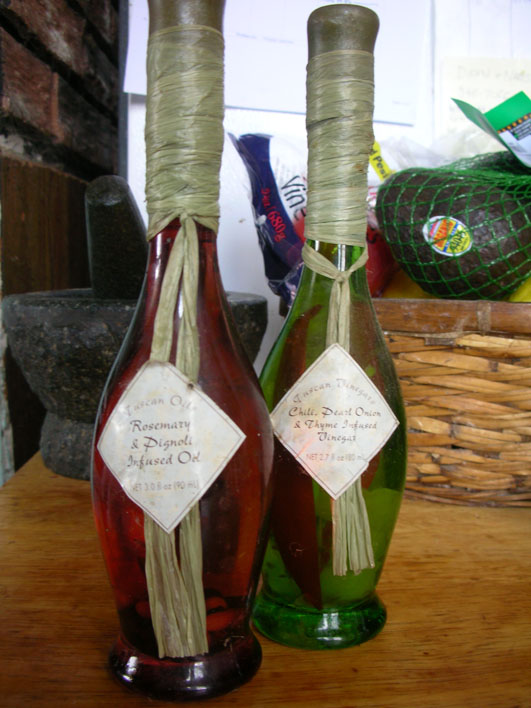
This week I am going to take a breather on the challenges. I am still working with nettles and using my vinegar and oil and drinking my infusions but I'm behind myself on the challenges and I've noticed others are having a time keeping up as well. I may slow it down to a challenge every 2 weeks for awhile just to give everyone a chance to catch up.

During this week off of new challenges, keep up with your previous challenges, finish ones you haven't been able to and continue to observe your growing seedlings.

Sunday, March 13, 2011

Ready?

In light of the situation in Japan, I thought it would be timely to write about the benefits of preparedness. I am not an alarmist, I live my life but I also plan and prepare "in case of an emergency."

Certainly Japan's situation is severe but being that it is a natural disaster, it proves that anything can happen anywhere.

Take a look at your geographical region. There is some kind of natural disaster that can happen at any time...earthquakes, tornadoes, volcanoes, tsunamis, hurricanes and unfortunately, as we've seen in Japan with the natural disasters, they can also lead to man-made disasters such as the nuclear plant threatening to melt down.

Being an herbalist, I lean towards the medical side of preparedness and tend to have all sorts of medical equipment available. Sutures, dental tools, gauze pads, tape, hot water bottles, ice pack containers, blood pressure cuffs, syringes, etc. are all available in my home. I use some of them every day for small emergencies and some are put away for severe emergencies but knowing I have them available if need be is comforting. If something were to happen, I hope I would be able to provide my community with medical care if needed.

I have gallons of water stored away in the basement and it's been awhile since they have been filled so I plan to rotate them out this summer with fresh water, using the old water for my garden as needed. I cannot stress the importance of having fresh water saved back as well as water filters. We have a Berky water filter for every day use and I'm in the process of purchasing a compact Katadyn water filter to store in my truck.

At the very minimum, you should store 2 weeks worth of water for each member of your family and pets too. The recommendation is 2 gallons per person. It may seem silly now but consider this statement:

"By Monday, officials were clearly overwhelmed by the scale of the crisis, with millions of people having spent three nights without water, food or heat in near-freezing temperatures. At least 1.4 million households had gone without water since the quake struck and some 1.9 million households were without electricity." - http://www.ketv.com/r/27184574/detail.html

It would be good to store a minimum of 2 weeks worth of food as well. Mormons are required to store 1 year's worth of food for their family. Again, this may seem extreme but wouldn't be comforting to know if you lost your job you'd still know how you were going to feed your kids? The rule of thumb for storing food is "Store What You Eat and Eat What You Store." The Mormons have great guides available to help you get started with food storage, including food calculators to determine how much you need to store and local Canneries to help you can your bulk foods.


I have been perusing youtube prepper videos to refresh my mind on preparedness tactics. While I feel they are a bit fanatical, I enjoy learning about others point of views in regards to storage and preparing.

We typically garden every year, raise animals for food (eggs, milk, honey, meat) and have an orchard. herb garden and I buy grains in bulk. We are also trying to grow enough grain to feed our animals in the winter though we have not been successful yet.

All my kids have throwing knives. Under supervision, they practice their throwing skills. I believe everyone should know how to protect themselves and learning to throw knives can help with that skill as well as killing wild animals if the need should arise.

My kids also know wild plants, edible plants and practice survival days to work on their skills. They view it as fun, I view it as security.

I introduce weeds into our diet on a regular basis and teach my kids what is edible. This is invaluable information. Knowing we can eat the plants that grow around us and thrive is helpful if we have to leave our homestead.

Another item we focus on is heating. Our home is strictly heated with wood now and we have 3 kerosene back-up heaters. We store bulk kerosene and have easy access to free wood. Our heating bills are minimal and if the electricity goes off, it will not affect our warmth. Being warm is comforting in times of distress and if something happened, knowing we were warm would help us deal with the other problems at hand.

We have plenty of back up lighting too. I love my Aladdin lamp and hope to get another one. This runs off of kerosene or lamp oil. We also have a few other oil lamps though they are not nearly as nice as the Aladdin. A lot of people are wary about using oil lamps, especially with kids but ours have learned to respect the lamps and stay clear of them. We also use candles a lot and have many stored away. I think part of preparing for an emergency is to not only to store away these things and eat the food you store but to also be comfortable and familiar with using alternate lighting sources. Things tend to be more shadowed in candle light and if children, especially small children are used to it, it will not make the lack of electricity more traumatizing. They are used to seeing the rooms lit with candles and oil lamps so they are comfortable with the flickering shadows.

I have back packs for each kid, also known as bug-out-bags in case we have to get out of here. I am working on re-packing them as it's been awhile and they are outdated (don't need diapers anymore!).

My kids love to ride bikes and I encourage it. Bikes can be an alternate form of transportation if need be and the more they ride, the better their stamina will be. I hope to encourage them to ride with back packs on so they can get used to the weight. Even my 4 year old is good on a bike which pleases me because even the littlest needs to be strong.

What scares me most about TEOTWAWKI, WTSHTF and/or WROL is not that life as we know it is ending but the the people who are NOT prepared, mainly our neighbors in the subdivision. Their life is SO different than ours and I've tried to friend them in the past but we are so different, they treat us coldly. IF something happens, I know whos animals are going to be in jeopardy, who they are going to look to for security, food, life and that worries me. I don't mind teaching them skills, but I don't want to be taken advantage of or robbed after my hard work of balancing my every day life with preparing while they live a carefree life. It's not fair and I won't stand for it, if the time comes, to give up my hard work to lazy, unforseeing people who are more interested in stocking their homes with the latest WII, tvs, gadgets, etc.

Sharon Astyk writes about being prepared all the time. She started Independence Days a few years back as a way to encourage people to prepare and learn. While I don't have time to actively participate anymore, I am continually preparing and stocking away as much as possible.

Today I made soil blocks to start seeds in. This will eventually become our garden that will give us food for the spring, summer and fall. I hope to also put away food to get us through the winter. We are spoiled and will not be 100% self sustained unless TSHTF and we have no other choice and I'm OK with that. I like my chocolate and my Kahlua and other privileges I can pick up from the grocery store. At the same time, I know if something happens, whether it lasts a week, month or the rest of our lives, I will be prepared and ready to provide for my children the best I can because I've been working on it all these years. (And yes, I have directions on how to make our own whiskey, wine and brandy in case we can't buy it from the store anymore....in fact, I make my own wine now...).

I have many topics I could cover on this subject. What are you doing to prepare? What do you need to know, what do you need to do to furture prepare? It's never too late to get started, it's better to start preparing now than to never be prepared at all, Japan has proved that over the past few days...

Monday, March 7, 2011

Vinegar Note

For everyone working with their vinegars this week, Heal Thyself has created an acv challenge. There are 2 experiments, the first being to take acv before bed 4 times in a week and the 2nd is to take it 4 mornings in a week. The 2nd challenge started today so I think I'm going to start there and then next week go back and revisit experiment 1.

Solstice 2011 Gift Ideas

It's never too early to start coming up with gift ideas for the holidays! I've learned the sooner I start on them, the less of a hassle November and December are for me. Simplifying my expectations and gifts has helped a lot too. I now only purchase 1 gift for each kid plus stocking stuffers and everyone else gets handmade.
I like to mix it up and try to give everyone a basket of goodies. This year, I have started dabbling in making homemade raw chocolate and all I can say is YUM! I also and in love with elixirs thanks to Kiva and Ananda and some local friends who made a very inspiring black walnut elixir.

Planning ahead not only saves a lot of headaches but it allows for a lot of room for coming up with the results. For instance, in the past I have filled paper bags with goodies but this year I think I'd like to give actual baskets that can be reused. I can pick up baskets for $.50 - $2.00 at thrift shops so I'll be accumulating baskets over the coming year. I'll also grab cloth napkins at .50 each to line the baskets with. If I wanted to make this a no-cost Solstice, I could start dabbling in basket making as we have lots of honeysuckle and sew simple square linings out of scraps of fabric I have lying about for previous crafts but I think I'll pass this year. And, since I know I'll be giving elixirs and chocolates, I am thinking about packaging that is reusable. I have lots of altoid tins and other tins that I can decoupage for the chocolates and/or I can purchase some larger ones at the thrift shops, also for about $1-2 each. Elixirs taste fine out of a jar but are extra special if they are in a pretty bottle. I'll be saving old bottles such as salad dressing bottles, olive oil bottles and anything else that has a long skinny neck, such as a vinegar bottle. Occasionally I find pretty decanter bottles for $1-3 as well, I may grab a few for those extra special people in my life. Once the elixirs are made, I can dip the lid in melted beeswax to seal it off.
I plan to dedicate a shelf in the basement for storing baskets, bottles and tins so I can quickly see what I've got and remember where I've stashed them all. As for the tins, I hope to use rainy days to have the kids help me decoupage them so that I have a ready supply ready to be used come December.
My goal this year is to have the majority of my gifts made by the end of October. That will leave making the chocolate at the last minute but chocolate is really quick and simple to make so that won't be a problem. 

Have you begun thinking about the holidays this year and what you'll be making for them? In what ways have you begun to prepare?

Sunday, March 6, 2011

Herbal Ally Challenge #9: Review and Vinegars Part 2

This week we will be revisiting some challenges we started earlier. It is easy to make your herbal medicine and then let it sit and forget about it so we’ll be focusing on a few herbal medicines we made as well as reviewing our research.
Assignment 1:
Take a moment to read through your journal from start to finish. Reflect on everything you have learned about your ally up to now and make note of anything you’ve written down previously and forgotten about. Reread any herbal books you feel necessary or pertinent to helping you remember this forgotten information. Jot down any lessons you have learned about your ally up to this point.
Assignment 2:
Your vinegar should be ready to use now. Try it out at least once a day and record your experiences. You can use it simply by taking a tablespoon in a glass of water at night before bed or if you are having digestive issues, 20 minutes before eating or be more elaborate and sprinkle it on food, mix with your herbal oil to make salad dressing or more. Refer back to the first Vinegar challenge (Challenge #5) for more ideas on uses. 
For the first time when using your vinegar, taste your vinegar with a clean pallet. Focus on the taste of your vinegar and record anything you notice, such as an opening in the chest, a soothing of the stomach and so on. Make note of how you felt before and after tasting the vinegar, physically and mentally. You can choose to continue this step each day or not, but try to be aware of any changes you feel.
Assignment 3:
Record anything noticeable, large or small in using your ally vinegar. 

---

Don't forget to check on your seedlings, making sure they are still damp and getting plenty of sunlight! 

If your ally is a nourishing herb, keep taking your infusions and record any changes you are feeling after having taken them for 2 months. 

Coming up in the next few weeks, we'll be revisiting our tinctures, oils and adding a daily meditation to our challenges. If you are new to this challenge, you are welcome to work at your own pace from the beginning or go back to lessons 5 - 8 to get up to speed to where we are now. Lessons 1-4 can be done at any time and can be intertwined with the other lessons.

Saturday, March 5, 2011

Herbal Ally Challenge #8 Completed

Urtica dioica seeds

This week I started my nettle seeds. I could not find my packet of seeds I purchased last year so I harvested seeds off of the dead plants from last year's growth.


I love to use paper egg cartons to start my seeds. I filled the entire 18 holes with seed, broadcast across the moistened compost mix I used. I spread them thickly as I have no idea how viable these seeds are.


I placed the carton in a ziploc bag to help keep the air humid and the soil moist until they germinate. According to this research article from Portugal, seeds began germinating at 6 days when receiving 12 hours of light. Since we are almost to the Spring Equinox, we are getting about 11 1/2 hours of daylight and I use a full spectrum bulb in the evening so hopefully they will start germinating in about 6-7 days.

Urtica dioica

In my research of nettles, I discovered that although Urtica dioica is a perennial, U. urens is an annual. I am not sure if my wild nettles are U. dioica but I do know they are perennial based on their emergence. I hope to be able to positively identify the species by the end of the growing season this year.

Urtica dioica seed head

In my observations of the wild nettles, I've noticed the sprouts are very purply. I remember reading about a species being purple and I need to consult my notes to refresh my memory on that.

Urtica  - wild grown nettles sprouting from last year's growth

I have been using my nettles oil in cooking and hope to get some use on aches and pains as well or perhaps a rash. Just waiting for the right moment (let this be notice to all my family!). The vinegar is looking great and I plan to start using it soon. My tincture has 1 more week to go but I don't have any use for it yet although I'd like to play around with taking dosages to help increase energy levels, I'm not sure if it will work that way or not as it does for infusions. I'm thinking not but one never knows until they try.
Related Posts with Thumbnails